
Enrollment, Opportunity, and Trust: Lessons from LAUSD's iEnroll Initiative
By Marco Vargas, CEO & Co-Founder, Fifth Sun Pictures
Published Wednesday, June 17, 2026
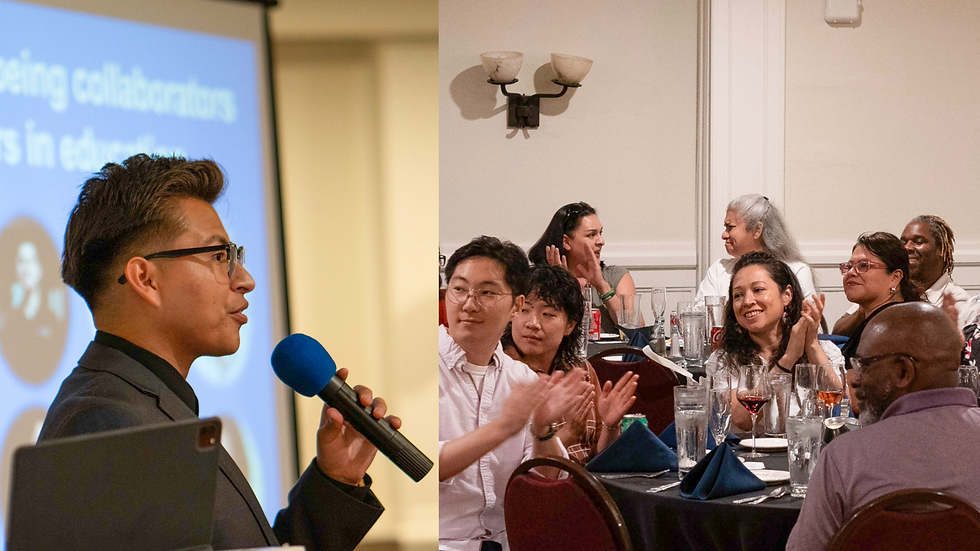
I graduated from LAUSD in 2018.
Today, through Fifth Sun Pictures, I have the privilege of partnering with schools across Los Angeles on enrollment, career readiness, workforce development, and student storytelling initiatives.
Over the past year, I participated in dozens of conversations with principals, assistant principals, counselors, teachers, and district leaders through LAUSD's iEnroll Initiative.
I expected most of those conversations to be about marketing.
They weren't.
Instead, many conversations focused on something much bigger: opportunity.
According to recent district financial forecasts, LAUSD projects budget deficits exceeding $1.4 billion by the 2027–28 school year, driven largely by declining enrollment and the expiration of one-time pandemic funding. Source: LAist, May 2026. As enrollment declines, schools face difficult decisions about staffing, programming, and student support services.
Administrators spoke about budget uncertainty, staffing challenges, student engagement, and the future of programs that support students. In more than one meeting, school leaders described difficult scenarios that could result from declining enrollment: fewer counselors, fewer assistant principals, reduced staffing, and fewer opportunities for students.
The conversation was rarely about marketing.
It was about protecting programs that students rely on.
That experience reinforced something I have come to believe strongly:
Enrollment is not simply a marketing challenge.
Enrollment is ultimately a conversation about opportunity, trust, and the future of our schools.
Lesson #1: Enrollment Is a Strategic Challenge, Not a Marketing Challenge

One of the most common misconceptions about enrollment is that schools simply need better marketing.
In reality, most school leaders already understand the importance of enrollment.
The challenge is capacity.
Administrators are balancing staffing decisions, compliance requirements, instructional priorities, budgeting, family engagement, testing schedules, and countless operational responsibilities. Enrollment planning often competes with dozens of urgent priorities.
As a result, recruitment efforts frequently become reactive rather than strategic.
Successful enrollment initiatives require more than a flyer, social media post, or promotional video.
They require:
Clear messaging
Defined recruitment goals
Community engagement
Cross-functional collaboration
Consistent implementation
Long-term planning
The schools best positioned for long-term success are often the schools that treat enrollment as a year-round strategic priority rather than a seasonal campaign.
Lesson #2: The Hidden Enrollment Opportunity
One lesson that surprised me was how often enrollment and career readiness are treated as separate conversations.
Schools frequently discuss enrollment in one meeting and pathway funding in another. Yet many of the programs families care most about—student leadership, film production, arts education, STEM experiences, internships, college readiness, and career pathways—can often be supported through existing funding sources.
This opportunity becomes even more important as enrollment pressures continue across Los Angeles Unified. District enrollment has declined from approximately 746,000 students in 2002 to roughly 408,000 students in recent years, creating increased pressure on schools to maintain staffing, programs, and student supports. Source: The 74, citing LAUSD enrollment data.
Throughout the iEnroll Initiative, I found that many schools were still underutilizing opportunities such as the Golden State Pathways Program (GSPP), Expanded Learning Opportunities Program (ELOP), Culture Arts Passport (CAP), and other career-connected learning initiatives. In many cases, school leaders were facing budget pressure while simultaneously overlooking funding sources that could strengthen student experiences and support enrollment goals.
This presents a significant opportunity.

Rather than viewing enrollment and career readiness as separate priorities, schools can begin aligning them.
When students participate in meaningful career-connected learning experiences, schools gain powerful stories to share with families.
When families see authentic opportunities available to students, confidence in the school grows.
The strongest enrollment strategy is often creating opportunities worth talking about.
Lesson #3: Why Film Production Became More Than a Marketing Project

Many schools initially approached our work as a video project.
What we discovered was that the film production process itself often became one of the most valuable outcomes.
Many school leaders expressed confidence that students and staff would be comfortable on camera. In practice, we found that interview preparation, scripting, media training, and story development created significant value for students, teachers, and administrators alike.
The pre-production process gave schools time to reflect on important questions:
What makes our school unique?
What programs should families know about?
What opportunities are we most proud of?
What message do we want students and families to remember?
In many cases, the film production process became an opportunity for schools to refine and reinforce their academic priorities, pathway offerings, and extracurricular programs.
The final video mattered.
But the conversations that happened before the camera rolled often mattered just as much.
Schools left with greater clarity, stronger messaging, and more confidence in communicating their value to prospective families.

Lesson #4: Students Should Be Ambassadors for Their Schools

One of the strongest lessons from the initiative was the importance of student voice.
Students should not simply appear in enrollment materials.
They should actively participate in enrollment efforts.
Students can serve as ambassadors through:
School tours
Articulation presentations
Visits to feeder schools
Student-created social media content
Student-produced videos
Digital media clubs
Website clubs
Career Technical Education pathways
Community events
When done intentionally, these activities support both enrollment and workforce development goals.
Students gain confidence, communication skills, project experience, and leadership opportunities while helping schools tell authentic stories.
However, student involvement does not happen automatically.
It must be planned, supported, and prioritized.
The schools creating the strongest student ambassadors are often the schools providing meaningful opportunities for students to lead.
Lesson #5: Families Want More Than Information
A common misconception is that enrollment is primarily about providing information.
Families certainly want information.
But what many families are really seeking is reassurance.
They want confidence that their child will be supported.
They want to know that staff are welcoming.
They want to know that communication will be consistent.
They want to feel that their child belongs.
While student voices are incredibly powerful, administrators, counselors, teachers, and support staff remain trusted messengers for families.
Successful enrollment efforts require both.
Student stories help families imagine possibilities.
School staff help families feel supported.
Together, they create trust.
Because ultimately, families are not simply selecting a school.
They are selecting a community.
A Story I'll Never Forget
One of my favorite examples comes from our ongoing partnership with Los Angeles High School of the Arts (LAHSA).
This year, we hosted our fourth annual student film festival as part of our film production programming.
During the event, both students and parents spoke about the impact of the experience.
Students shared how participating in film production and acting pathways increased their confidence, strengthened their communication skills, and helped them discover new career interests.
Parents described seeing their children transform throughout the program.
They saw increased confidence.
Greater engagement.
Stronger communication skills.
A willingness to step outside their comfort zone.
Most importantly, they saw their children growing in a positive learning environment surrounded by supportive peers and educators.
Those conversations reinforced something I continue to believe:
Families are not simply choosing a school.
They are choosing a set of opportunities and a vision for their child's future.
Looking Ahead

The iEnroll Initiative provided schools with enrollment assets, recruitment resources, outreach toolkits, and implementation support.
But perhaps the most important lesson was this:
The schools that will thrive over the next five years are not necessarily the schools with the biggest marketing budgets.
They will be the schools that clearly communicate opportunity.
Schools that connect enrollment, student voice, career readiness, and community engagement into a unified strategy will be best positioned to attract families, sustain programs, and prepare students for success.
As someone who benefited from public education in Los Angeles, I know firsthand how a single opportunity can change a student's trajectory.
That is why enrollment matters to me.
Every student who finds the right school gains access to experiences, mentors, and opportunities that can shape their future.
Enrollment is often measured in numbers.
But behind every enrollment decision is a family making one of the most important choices they can make for their child.
The schools that will thrive in the years ahead will be the schools that clearly communicate opportunity, build trust, and create experiences that students are proud to talk about.
Because when students become ambassadors, families become advocates, and schools become communities, enrollment becomes the outcome—not the objective.
About the Author
Marco Vargas is the CEO & Co-Founder of Fifth Sun Pictures, a Los Angeles-based social enterprise that partners with schools, nonprofits, government agencies, and businesses to support enrollment marketing, Career Technical Education, workforce development, film production, and student storytelling initiatives. A graduate of LAUSD and alumni of Dartmouth College, Marco is passionate about expanding opportunities for young people through education, entrepreneurship, and career-connected learning.

