From Wearables to Workforce: What the Meta Wearables Community Summit Signals for the Future of Cultural Learning
- Jan 6
- 5 min read
By Marco Vargas, CEO, Fifth Sun Pictures
Published Wednesday, January 7, 2026

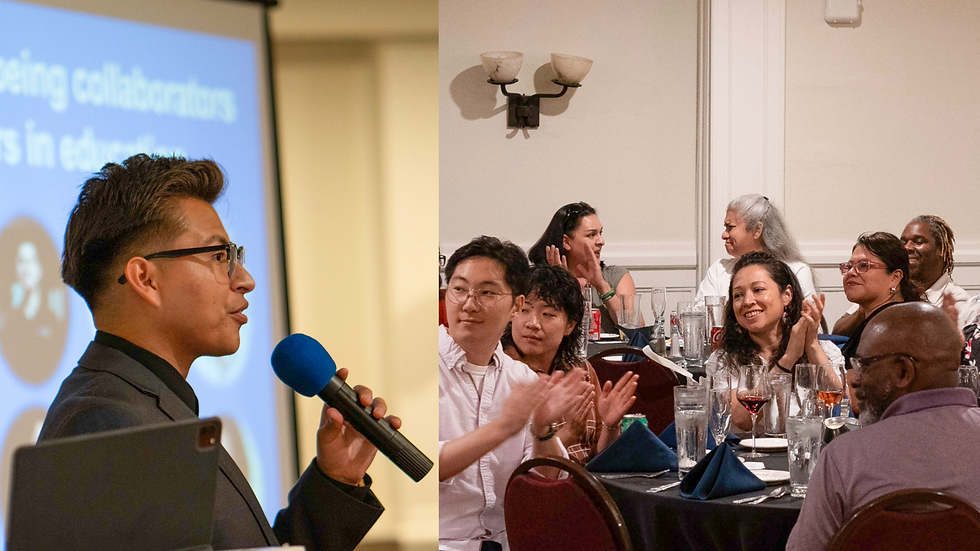
In December 2025, I joined educators, accessibility advocates, developers, researchers, and policy leaders at the Meta Wearables Community Summit. What quickly became clear was that wearables are no longer an emerging concept—they are becoming a practical learning interface with real implications for education, workforce development, and cultural access.
What stood out most was the depth of the conversation. This was not a summit about technology for technology’s sake. Instead, speakers and participants focused on meaningful use cases already transforming accessibility, productivity, and learning across industries—from education and agriculture to construction, healthcare, and the arts.
For Los Angeles, especially as we prepare for LA28, this moment presents an opportunity to rethink how learning happens in public spaces—and who gets access to it.

Wearables as the Next Learning Layer
Across the summit, one theme surfaced again and again: hands-free, AI-assisted wearables enable learning in motion.
Participants demonstrated how AI glasses are being used for:
Real-time translation and transcription
Hands-free documentation during fieldwork
Voice-to-text writing and revision support
Contextual prompts layered directly onto the physical environment
With Meta expanding its portfolio of AI wearables and launching a developer preview of its Wearables Device Access Toolkit, the barrier to building custom, mission-aligned learning experiences is rapidly shrinking. This opens the door for educators, nonprofits, and cultural institutions to move beyond passive consumption toward active, situated learning.
At Fifth Sun Pictures, this aligns directly with our belief that the most effective learning happens when students are observing, creating, documenting, and reflecting in real-world contexts.


Why This Matters for Career Technical Education (CTE)
Career Technical Education has long sought better ways to bridge classroom instruction with real-world application—especially for students who thrive through experiential, visual, and project-based learning.
Wearables help close that gap.
When integrated into prepared lesson plans and field-based activities, wearable technology can:
Support multimodal learning for neurodiverse and multilingual students
Reduce barriers for students who struggle with traditional reading and writing
Enable first-person documentation of creative and technical work
Produce authentic learning artifacts aligned to academic and career outcomes
Rather than treating wearables as a standalone program, Fifth Sun approaches them as an accelerator across the CTE continuum—from career awareness and skill building to paid internships and professional pathways.
Reimagining Cultural Access Through Art Centers
Across Los Angeles, many of our most important cultural institutions are navigating a dual moment: site renovation and conservation on one hand, and expanding digital and remote accessibility on the other. Art centers like the Watts Towers Arts Center Campus are not only historic landmarks—they are living ecosystems of community memory, creativity, and education.
At Fifth Sun Pictures, we see this moment as an opportunity.
Rather than separating physical and digital access, we are exploring how wearable technology and AI can enhance cultural art walks, allowing visitors, students, and community members to engage with art, history, and place in more immersive and inclusive ways.
Through hands-free documentation, contextual storytelling, real-time translation, and AI-assisted prompts, wearables make it possible to layer learning directly onto the environment—without disrupting the integrity of the site.

This approach supports:
Inquiry-driven exploration
Oral history capture and community storytelling
Accessibility for multilingual, neurodiverse, and mobility-limited visitors
Student-created media tied to academic and workforce outcomes
As art centers continue improving on-site infrastructure and online accessibility, Fifth Sun aims to partner with institutions like Watts—and others across Los Angeles—to pilot wearable-enhanced cultural art walks that serve both in-person visitors and global audiences.
This work is not about replacing the physical experience of art and place. It is about extending it—so more people can see, hear, understand, and contribute to the stories these spaces hold.
2026: From Vision to Pilots
Building on insights from the Meta Wearables Community Summit and ongoing local partnerships, Fifth Sun Pictures is advancing several initiatives in 2026 that bring this vision into practice:
Countywide digital literacy and outreach efforts, incorporating wearables into community learning environments
Prepared lesson plans and immersive fieldwork models for cultural sites undergoing renovation and accessibility expansion
Wearable-enhanced student engagement campaigns that blend storytelling, documentation, and career exploration
Community workshops that empower young people to capture and share their neighborhoods through responsible, creative use of emerging technology
Together, these efforts form a scalable model for connecting education, culture, and workforce development—rooted in place, powered by technology, and guided by community needs.
An Invitation to Collaborate
One of the most compelling questions raised at the summit was simple but urgent:
How do we design cultural and learning experiences that are accessible, spontaneous, and meaningful for everyone?
As Los Angeles prepares for a global audience during LA28, this question matters more than ever.
Fifth Sun Pictures is actively seeking art center, education, and civic partners interested in piloting wearable-enhanced cultural art walks and immersive learning experiences. Whether through grants, pilots, or collaborative programming, we believe the future of cultural learning will be defined not just by innovation—but by who is invited to participate.
We look forward to building that future together.

********************************************************************************************************************
Resources for Educators, Developers, and Cultural Institutions
The Meta Wearables Community Summit reinforced that this ecosystem is not just about ideas—it is supported by active tools, documentation, and pathways for collaboration. For partners interested in exploring wearable-enhanced learning, accessibility, or cultural programming, the following resources provide helpful entry points:
Meta Wearables Device Access Toolkit (DAT): Meta has released a public Developer Preview of its first-ever toolkit designed for building applications with AI glasses. The toolkit enables approved access to camera and audio functionality across Meta’s growing portfolio of wearable devices, with broader publishing capabilities expected in 2026.
Wearables Developer Center: A centralized hub where developers, educators, and organizations can sign up for updates, access documentation, review acceptable use policies, and manage testing tools. This resource reflects Meta’s emphasis on innovation balanced with privacy, safety, and responsible use.
Developer Documentation, FAQs, and Policies: Meta has published clear guidance for third parties building with wearables, including acceptable use policies, developer terms, and reporting mechanisms. These materials are especially relevant for education and cultural partners exploring pilots involving students, visitors, or community members.
At Fifth Sun Pictures, we view these resources not as standalone technical tools, but as building blocks—supporting thoughtful experimentation, prepared lesson plans, and pilot programs that align technology with learning goals, accessibility, and cultural stewardship.